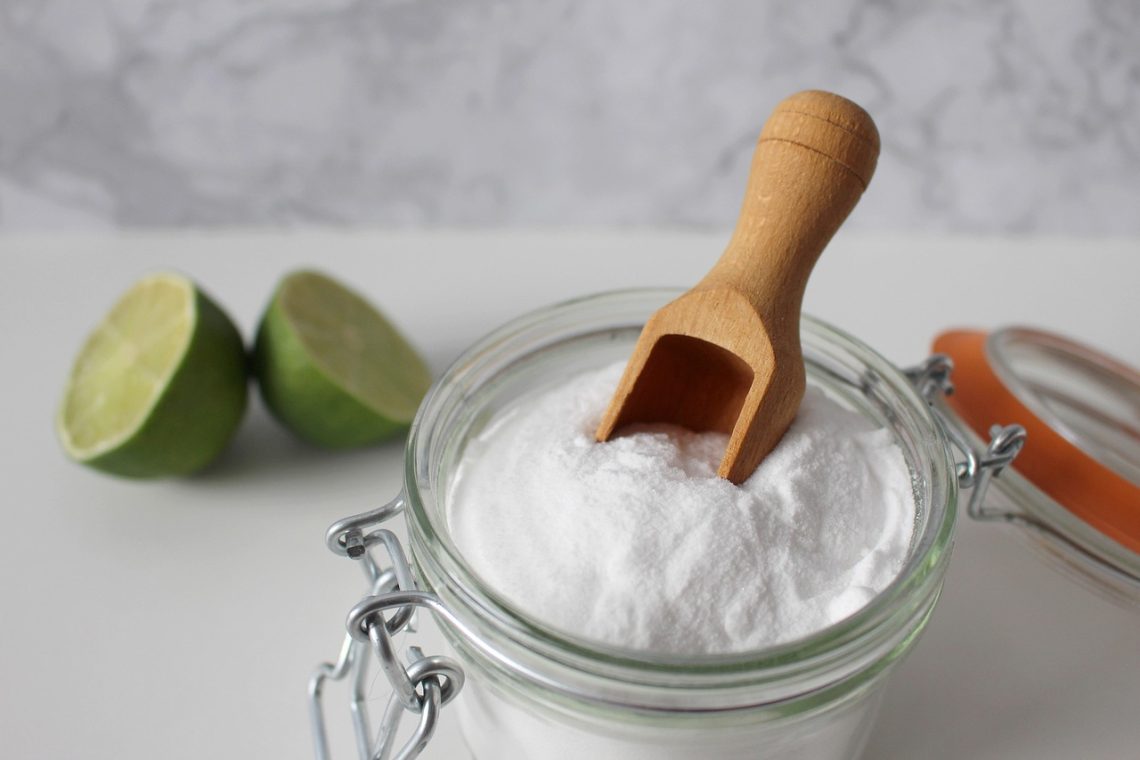
Open a pantry and you will likely find two nearly identical white powders sitting side by side: baking soda and baking powder. They share a shelf, a purpose, and a confusingly similar name, yet they are chemically different ingredients that behave in different ways. Using the wrong one, or the wrong amount, can turn a batch of cookies flat, leave muffins tasting soapy, or cause a cake to collapse in the middle.
This guide explains what each leavener is, how it produces carbon dioxide, why some recipes call for one and others for both, and how to substitute one for the other without ruining the bake.
The short answer
Baking soda is pure sodium bicarbonate. It is a base that needs an acid to react with before it can release gas. Baking powder is sodium bicarbonate mixed with a dry acid and usually a little starch. Because the acid is already built in, baking powder only needs moisture and heat to activate.
In practical terms: baking soda requires an acidic ingredient in the recipe (buttermilk, yogurt, lemon juice, brown sugar, cocoa, molasses), while baking powder is self-contained and works in recipes with no significant acid.
What is baking soda?
Baking soda, or bicarbonate of soda, is a single chemical compound: sodium bicarbonate (NaHCO₃). It is mildly alkaline and slightly bitter in taste. On its own in a dry pantry it is stable and essentially inert.
When sodium bicarbonate meets an acid and moisture, it reacts immediately and releases carbon dioxide gas. Those bubbles expand in the batter, get trapped by the gluten and starch network, and are set in place by the heat of the oven. The reaction is fast, which is why batters raised primarily with baking soda are usually baked promptly after mixing.
The reaction also neutralizes the acid, which is why baking soda is useful for more than leavening. A pinch can soften the acidity of tomato sauce, reduce bitterness in coffee, or help beans cook more tenderly.
Common acids that activate baking soda
- Buttermilk, sour cream, and plain yogurt
- Lemon juice, vinegar, and citrus zest
- Brown sugar and molasses
- Natural (non-alkalized) cocoa powder
- Honey and some fruit purées
What is baking powder?
Baking powder is a complete leavening system in a can. It contains sodium bicarbonate, one or more dry acids (commonly cream of tartar, sodium aluminum sulfate, or monocalcium phosphate), and a small amount of starch such as cornstarch to absorb moisture and keep the ingredients from reacting in the tin.
Because the acid is already present, baking powder simply needs liquid to begin reacting. Most supermarket baking powder is double-acting: one acid reacts at room temperature when the batter is mixed, and a second acid reacts only when the batter reaches oven temperature. This two-stage design gives batters a more forgiving window between mixing and baking.
There is also single-acting baking powder, which releases all of its gas at once upon mixing. It is less common in supermarkets but appears in some traditional recipes.
Side-by-side comparison
| Feature | Baking soda | Baking powder |
|---|---|---|
| Composition | Pure sodium bicarbonate | Sodium bicarbonate plus dry acid and starch |
| Needs an acid? | Yes, from the recipe | No, acid is included |
| Reaction speed | Immediate on contact with acid and moisture | Double-acting: some on mixing, most on heating |
| Flavor effect | Neutralizes acidity; too much tastes soapy | Can taste metallic or bitter if overused |
| Typical use | Buttermilk pancakes, brownies, soda bread, cookies | Cakes, biscuits, muffins, recipes without acidic ingredients |
| Strength | About three to four times stronger by weight | Weaker; used in larger quantities |
Why some recipes use both
Many classic recipes call for baking soda and baking powder together, and there are good reasons for it.
First, baking soda handles the acid in the recipe, neutralizing sour flavors and adding tenderness. But if the recipe contains only a modest amount of acid, the soda alone may not generate enough gas to lift a heavy batter. Baking powder makes up the difference.
Second, baking soda contributes browning. Because it is alkaline, it speeds up the Maillard reaction and caramelization, giving cookies and pancakes a deeper golden color. Baking powder, balanced by its own acid, has a milder effect.
Third, the combination gives a safety margin. A recipe with both leaveners is less sensitive to slight variations in acid content, which matters when buttermilk or yogurt varies in acidity from brand to brand.
How to tell them apart in the kitchen
If the labels have worn off, a simple test distinguishes the two. Put a spoonful of the powder in a small bowl and add a few drops of vinegar or lemon juice. Baking soda will fizz vigorously and immediately. Baking powder will barely react, because its acid is dry and needs water plus its partner acid to produce a visible fizz.
A second test checks whether either is still active. For baking powder, stir a teaspoon into half a cup of hot water; fresh powder should bubble steadily. For baking soda, add a teaspoon to a splash of vinegar; a lively fizz means it is still good. Both ingredients lose potency over time, especially in humid conditions, so replace them every six to twelve months for reliable results.
Substitution rules that actually work
Substituting one leavener for the other is possible but not a straight one-to-one swap. The chemistry differs, so the amounts and the surrounding ingredients must change.
Using baking powder instead of baking soda
Baking powder is weaker and already contains acid. To replace one teaspoon of baking soda, use roughly three teaspoons of baking powder. However, that much baking powder can leave a metallic or bitter taste and may add too much lift, so this swap works best in small-quantity recipes such as a single batch of pancakes. It is not recommended for recipes that rely on baking soda for browning or for neutralizing a strongly acidic batter.
Using baking soda instead of baking powder
Baking soda is far stronger, so you cannot simply swap it in. A common homemade substitute is one part baking soda plus two parts cream of tartar, which recreates the acid that baking powder supplies. Use about one and a quarter teaspoons of this mixture for each teaspoon of baking powder called for. Mix it fresh, because it begins reacting as soon as it touches liquid.
Another option is to use baking soda plus an acidic liquid such as buttermilk or lemon juice, but this changes the recipe’s flavor and moisture balance and is best reserved for simple batters.
Common mistakes and how to avoid them
- Too much baking soda. Excess soda cannot be neutralized by the available acid, leaving a soapy, bitter taste and a yellowish crumb. Follow the recipe and do not round up.
- Forgetting to preheat. Baking soda starts working the moment it is mixed. A cold oven delays setting and can produce a flat, dense result.
- Overmixing. Stirring too long develops gluten and pops the gas bubbles, no matter which leavener you used.
- Using expired leaveners. Old powders lose strength gradually. Test them if a bake turns out unexpectedly flat.
- Assuming they are interchangeable. They are not. Treat the substitution rules above as emergency measures, not everyday practice.
Beyond baking: other uses
Baking soda is a workhorse outside the oven. It deodorizes refrigerators, scours sinks, softens water in laundry, and can be used as a gentle abrasive. Baking powder has few household uses beyond cooking, though it can occasionally stand in for baking soda in cleaning tasks when nothing else is available, at a much larger quantity.
Both should be stored in airtight containers in a cool, dry place. Moisture is the enemy: a humid kitchen can cause baking powder to clump and react prematurely, and it can turn baking soda into a brick.
Quick reference for the pantry
Keep both on hand if you bake regularly. Baking soda is essential for buttermilk pancakes, brownies, gingerbread, soda bread, and chocolate chip cookies. Baking powder is the leavener for cakes, biscuits, scones, and muffins that contain no acidic ingredient. When a recipe lists both, trust it: the author is balancing lift, flavor, and browning. Understanding that balance is the difference between following a recipe and knowing why it works.
Illustrative stock photo: Monfocus / Pixabay.