Food waste is one of those problems that feels enormous and abstract until you look inside your own kitchen bin. A wilted bunch of herbs, half a loaf of bread, a container of leftovers pushed to the back of the fridge—individually they seem trivial, but together they add up to a meaningful share of household spending and a real environmental cost. The good news is that reducing food waste rarely requires dramatic lifestyle changes. It is mostly a matter of small, repeatable habits that fit into routines you already have.
This guide walks through practical, low-effort strategies organized around the life of your food: planning before you shop, storing what you buy so it lasts, cooking with intention, and giving scraps a second life. None of these ideas require special equipment or a big time commitment. Most take seconds to adopt and pay off every week.
Why household food waste matters
When food is thrown away, everything that went into producing it is wasted too—water, energy, land, labor, and transport. Food that decomposes in landfill also generates methane, a potent greenhouse gas. On a personal level, wasted food is wasted money: every item you buy and discard is a purchase that delivered no value.
The encouraging flip side is that households have direct control over their own waste. Unlike many sustainability issues, this one responds immediately to behavior changes. A few adjustments in how you shop, store, and cook can visibly shrink what ends up in the bin within a couple of weeks.
Start with a smarter shopping routine
Most food waste begins at the store, not the stove. Buying more than you can realistically use is the single biggest driver of household waste. The fix is not to shop less often, but to shop with a clearer picture of what you already have.
Shop your kitchen first
Before writing a list, take two minutes to scan the fridge, freezer, and pantry. Note what needs to be used soon—the half bag of spinach, the open jar of sauce, the chicken you defrosted but didn’t cook. Build the week’s meals around those items first, then fill the gaps. This one habit prevents duplicate purchases and rescues food that would otherwise be forgotten.
Plan meals loosely, not rigidly
A rigid seven-day meal plan often collapses by Wednesday, leaving unused ingredients behind. A looser approach works better: plan three or four meals you genuinely intend to cook, and leave room for leftovers, eating out, and improvisation. Choose recipes that share ingredients—if two dishes use fresh cilantro, you are far more likely to finish the bunch.
Buy smaller quantities of perishables
Bulk buying saves money only if you actually use the food. For highly perishable items—fresh herbs, salad greens, berries, soft cheese—buying smaller amounts more often is often cheaper in practice than watching a large package spoil. For shelf-stable staples, bulk is usually a safe bet.
Keep a running list and a “use it up” note
A simple list on the fridge door or a phone note serves two purposes: it reminds you what to buy, and it flags what must be eaten soon. Many people find a small whiteboard or a magnetic notepad works better than an app because it is visible at the moment of decision.
Store food so it actually lasts
Proper storage can extend the life of fresh food by days or even weeks. Much of what spoils quickly does so because of simple storage mistakes—moisture, ethylene gas, or the wrong temperature zone.
Know the ethylene producers and the sensitive ones
Some fruits and vegetables release ethylene gas, which speeds ripening and decay in nearby produce. Others are highly sensitive to it. Keeping them apart is one of the easiest storage wins.
| Ethylene producers (keep separate) | Ethylene-sensitive (store away from producers) |
|---|---|
| Bananas, apples, avocados, tomatoes, onions, stone fruit | Leafy greens, cucumbers, carrots, broccoli, peppers, berries |
Match the storage method to the food
- Leafy greens: Wash and dry thoroughly, then store in a container lined with a paper towel to absorb excess moisture.
- Herbs: Treat soft herbs like flowers—trim the stems and stand them in a glass of water, loosely covered. Hardy herbs like rosemary and thyme keep well wrapped in the fridge.
- Bread: Keep at room temperature in a paper bag for short-term use, or slice and freeze for longer storage. Never refrigerate bread, which speeds staling.
- Berries: Do not wash until just before eating; moisture encourages mold.
- Onions and potatoes: Store separately in a cool, dark, well-ventilated spot—together they accelerate each other’s spoilage.
- Bananas: Keep on the counter, and once ripe, refrigerate or freeze the fruit to extend its usable life.
Use the freezer as a pause button
The freezer is the most underused tool in the fight against food waste. Nearly anything on the edge of spoiling can be frozen: ripe bananas for smoothies, bread for toast, cooked rice in portions, leftover stew, even wine for cooking. Label items with a date so you know what to use first. A well-organized freezer turns “about to spoil” into “saved for later.”
Organize the fridge with visibility in mind
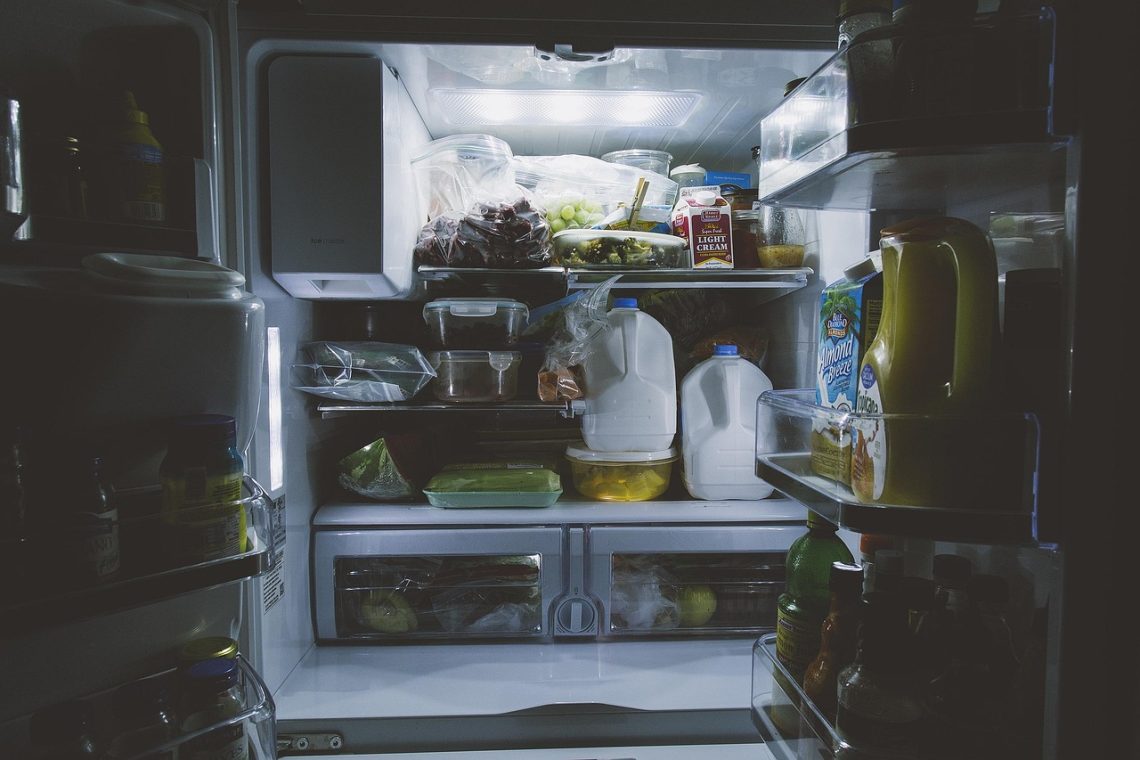
Food that cannot be seen cannot be eaten. Keep a designated “eat first” shelf at eye level for leftovers and items nearing their end. Use clear containers rather than opaque ones so contents are obvious. A quick weekly fridge audit—five minutes before your shopping trip—catches items before they turn.
Cook with intention and flexibility
Kitchen habits matter as much as storage. Cooking with what you have, rather than strictly following a recipe, is a skill that pays off in less waste and more variety.
Embrace the “use-it-up” meal
Once a week, cook a meal designed entirely around odds and ends: a frittata, stir-fry, soup, fried rice, or pasta dish. These formats are forgiving and can absorb almost any vegetable, cheese, or protein. Keeping a few versatile staples on hand—eggs, rice, pasta, canned tomatoes, stock—makes this easy on busy nights.
Treat recipes as guidelines
If a recipe calls for one carrot and you have three, use them. If it asks for a specific herb you do not have, substitute. The goal is to use what is on hand, not to shop for a single missing ingredient while other food waits in the fridge.
Cook once, eat twice—on purpose
Deliberate batch cooking reduces waste because it uses ingredients fully and creates planned leftovers. The key word is planned: portion leftovers into containers you will actually reach for, and label them with the date. Leftovers that are stored with intention get eaten; leftovers crammed into the back of the fridge become science experiments.
Understand date labels
Date labels are a common source of unnecessary waste. In most places, “best before” refers to quality, not safety—food past that date is often perfectly fine. “Use by” dates are more closely tied to safety for perishable items. Trust your senses: look, smell, and taste before discarding something solely because of a printed date.
Give scraps and leftovers a second life
Many items discarded by habit are actually usable. A little creativity turns would-be waste into stock, snacks, and ingredients.
- Vegetable scraps: Save peels, ends, and stems in a freezer bag and simmer them into homemade stock.
- Stale bread: Turn it into croutons, breadcrumbs, panzanella, or bread pudding.
- Overripe fruit: Use in smoothies, muffins, compotes, or sauces.
- Cheese rinds: Add to soups and stews for depth of flavor.
- Leftover coffee: Freeze into ice cubes for iced coffee, or use in baking.
- Citrus peels: Zest before juicing, and use peels to flavor water, vinegar, or cleaning solutions.
If you garden or have access to a compost program, composting is a good backstop for genuine scraps—but it should come after you have reduced what reaches that stage.
Build a simple weekly rhythm
Habits stick when they are attached to routines you already follow. A light weekly rhythm keeps food waste low without becoming a chore.
- Before shopping: Scan the fridge, note what needs using, and plan meals around it.
- After shopping: Wash and store produce appropriately, and place older items at the front.
- Midweek: Check the “eat first” shelf and freeze anything you will not finish.
- End of week: Cook a use-it-up meal and clear out leftovers.
That is roughly ten minutes of attention spread across the week—a small investment for a noticeably lighter bin and a fuller wallet.
Common myths that lead to waste
Some widely held beliefs quietly encourage throwing food away. Reconsidering them helps.
- “Past the date means unsafe.” Usually it means past peak quality. Use judgment, especially for shelf-stable and frozen items.
- “Leftovers are boring.” Leftovers become new meals with a small transformation—rice into fried rice, roast vegetables into a grain bowl.
- “Bruised produce is spoiled.” A bruise can often be cut away; the rest is fine.
- “Freezing ruins texture.” Some items freeze better than others, but many—bread, fruit, cooked grains, soups—freeze beautifully.
What to expect when you start
Reducing food waste is not about perfection. The first week, you may simply notice how much you throw away—and that awareness alone changes behavior. Over a month, most households find that a handful of habits do most of the work: shopping with a plan, storing produce correctly, keeping a visible “eat first” zone, and cooking one flexible use-it-up meal each week.
Start with one or two changes rather than all of them at once. The goal is a kitchen that runs a little more efficiently, where food gets eaten and money stays in your pocket—one small habit at a time.
Illustrative stock photo: Pexels / Pixabay.